{{ root_page.title }}
Early Years Foundation Stage
Early Years Foundation Stage (EYFS)
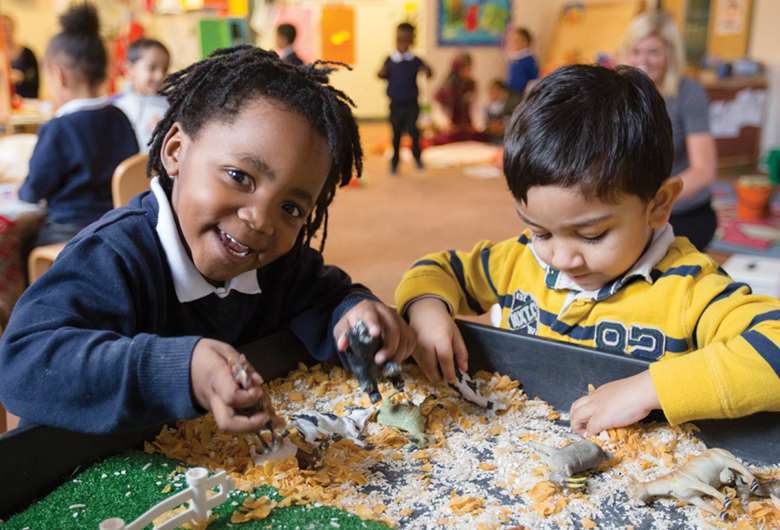
The Early Years Foundation Stage (EYFS) sets the statutory standards for the learning, development, and care of children from birth to 5 years old in England. There are two frameworks, one for group-based provision and one for childminders:
The EYFS statutory framework for group and school-based providers
It applies to all early years providers, including:
- Nurseries
- Playgroups
- Pre-schools
- Nursery classes in schools
- Reception classes in schools
This is the version for childminders: Early years foundation stage statutory framework for childminders
For more information about what you child will be learning at nursery and school there is a guide for parents and carers: What to expect in the EYFS
As well as the statutory framework, early years providers may use guidance such as:
- Development Matters: Development Matters - Non-statutory curriculum guidance for the early years foundation stage
- Birth to Five Matters
Purpose of the EYFS
The EYFS exists to ensure that all children:
- Are given high quality early learning and care
- Are kept safe and healthy
- Develop the knowledge, skills, and confidence they need for school
The Four EYFS Principles
The framework is founded on four key principles:
- A Unique Child
Every child is a competent learner from birth who can be resilient, capable, and self-assured . - Positive Relationships
Children learn best through warm, trusting, and secure relationships with adults and peers. - Enabling Environments
High-quality environments support learning and development by responding to children’s individual needs. - Learning and Development
Children develop at different rates, but their learning is interconnected and must be supported holistically.
Areas of Learning and Development
There are seven areas of learning, divided into prime and specific areas.
Prime Areas (fundamental to lifelong learning)
- Communication and Language
- Physical Development
- Personal, Social and Emotional Development
Specific Areas (strengthened by the prime areas)
- Literacy
- Mathematics
- Understanding the World
- Expressive Arts and Design
Educational Programmes
For each of the seven area, the EYFS sets out educational proframmes that describe what children should be learning and experiencing through planned and play-based activities.
Assessment in the EYFS
The framework includes two statutory assessments:
- Progress Check at Age 2
Identifies strengths and areas where additional support may be needed. - EYFS Profile (end of Reception year)
Teachers assess children against the Early Learning Goals (ELGs) to determine if they are:
- Emerging
- Expected
The Early Years Foundation Stage Profile (EYFSP) summarises and describes children's attainment at the end of the Foundation Stage that is, at the end of the reception year. Schools must report to parents how their children are doing across all the areas of learning, and describe how children are learning, called the characteristics of effective learning found in paragraph 1.18, page 17 in the EYFS Statutory Framework.
This profile is shared with Year 1 teachers and parents.
The importance of play
Play is central to the EYFS. Children learn best through:
- Exploration
- Active play
- Social interaction
- Real-life experiences
Practitioners scaffold learning, extending children’s ideas and supporting next steps.
Safeguarding and Welfare Requirements
These set the legal duties for providers, focusing on:
- Child protection
- Staff qualifications and ratios
- Health and safety
- Managing behaviour
- Medicines and first aid